
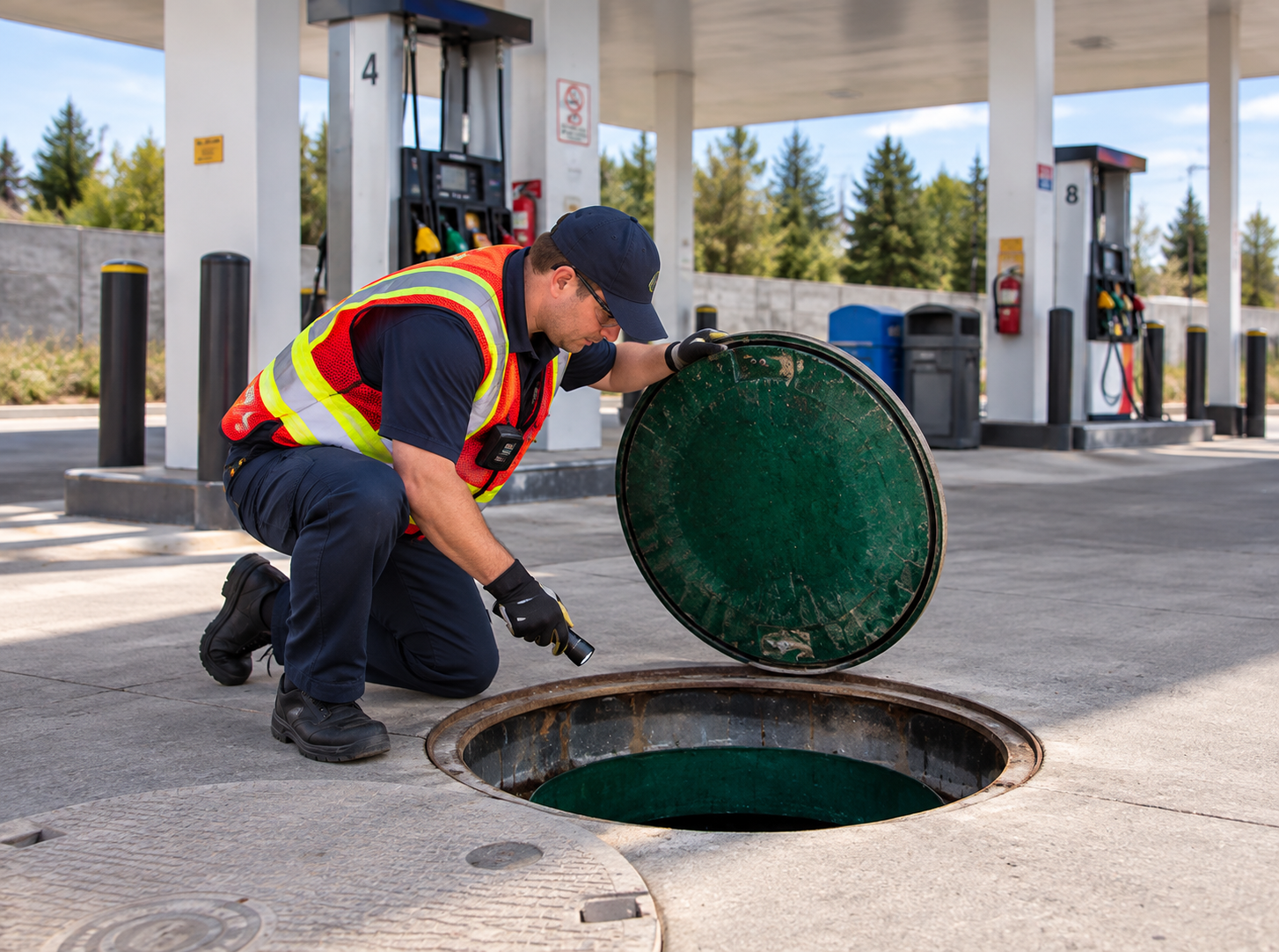
In Quebec, the Régie du bâtiment du Québec (RBQ) requires that the installation, modification, or removal of high-risk petroleum equipment be verified by a recognized person to ensure compliance with regulatory requirements. Following this verification, a certificate of compliance must be issued and submitted to the RBQ, particularly when applying for or modifying an equipment-use permit.
Owners and operators must also have their equipment periodically inspected by a recognized person to verify ongoing compliance. This inspection allows them to obtain the operating compliance certificate required to renew their permit.
We offer the following services as stand-alone or part of your bigger projects:
Our Services
-
Inspection of petroleum equipment and installations (new and existing) by RBQ-recognized professionals
Evaluation of tanks, piping, pumps, and fuel systems
Compliance verification with Québec regulations and standards
Detailed inspection reports and corrective action recommendations
Support during regulatory audits and compliance reviews
-
Support for design, specifications, and technical decision-making
Technical due diligence and feasibility studies
Cost estimation and budget validation
Process optimization and operational efficiency improvements
-
Full project lifecycle management (concept to completion)
Contractor selection, negotiation, and supervision
Budget control, scheduling, and cost optimization
Quality assurance and compliance monitoring
Coordination with stakeholders, municipalities, and utilities
Turnkey project delivery with full accountability
-
Preventive maintenance program development
Infrastructure lifecycle planning
Equipment replacement strategies
Performance monitoring and optimization
Emergency intervention and troubleshooting
Frequently
Asked
Questions
How often must high-risk petroleum equipment be inspected?
The required inspection frequency depends on the type, configuration, installation date, and petroleum product involved. Depending on the equipment, inspections are required every 2, 4, or 6 years. If equipment at the same location is subject to different inspection frequencies, the shortest interval applies.
Who can perform the required inspection and issue the certificate of compliance?
Periodic inspections must be performed by a person recognized by the Régie du bâtiment du Québec (RBQ), following the established inspection protocol. If the equipment meets all applicable requirements, the recognized person will issue a certificate of compliance with the Safety Code, which must be submitted to the RBQ when renewing the operating permit.
What happens if petroleum equipment does not meet the compliance requirements?
If non-compliant elements are identified, the recognized person will issue a notice of irregularity outlining the issues that must be corrected. If corrective work is required, a licensed contractor must perform the work. Once compliance is achieved and the required documentation is completed, the appropriate certificate can be issued and the permit renewal process can proceed.